
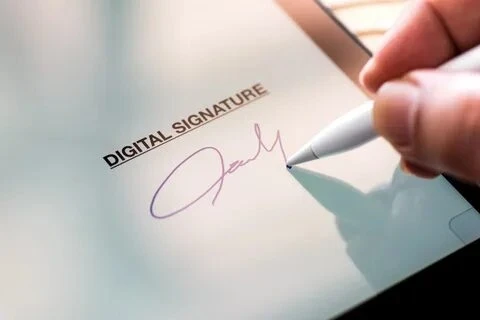
A small business owner once signed a vendor agreement through a free online tool, assuming it was just as valid as putting pen to paper. Months later, a dispute arose, and when it came time to prove the agreement was authentic, there was no real evidence behind the signature. No verification, no audit trail, nothing beyond a name typed into a box. The agreement became almost impossible to defend.
Stories like this happen more often than people expect, and they highlight a question many overlook until it becomes urgent: is this signature actually legally binding? Not every electronic signature is created equal, and understanding the difference can protect you from serious problems down the road.
At DocArrow, we built our platform specifically around this concern, helping individuals and businesses use legally binding eSignatures that hold up when it matters most. This blog explains exactly what makes an eSignature enforceable, the laws behind it, and what to look for so your agreements never leave you exposed.
Why the Legal Validity of a Signature Actually Matters
Signing a document is meant to represent agreement and accountability. When a signature does not hold up legally, that entire foundation weakens. This becomes especially important for contracts involving money, property, employment, or confidential information.
Many people assume that any typed name or scribbled mark on a screen counts as an official signature. In reality, whether an eSignature is legally binding depends on several factors, including how it was created, whether the signer's identity was verified, and whether there is a reliable record proving the agreement took place as described.
Without these elements, a signed document can become difficult, or even impossible, to defend if a disagreement ever ends up in front of a judge, an auditor, or a regulatory body.
What Laws Govern Legally Binding eSignatures?
Electronic signatures are not left to guesswork. Several established laws define exactly what is required for an eSignature to be considered valid and enforceable.
ESIGN Act Compliant Electronic Signature
In the United States, the Electronic Signatures in Global and National Commerce Act, commonly known as the ESIGN Act, gives electronic signatures the same legal standing as handwritten ones. For a signature to be considered an ESIGN Act compliant electronic signature, certain conditions must be met, including clear consent from the signer to use electronic methods, the ability to retain a copy of the signed document, and a reliable way to associate the signature with the signer.
DocArrow follows these requirements closely, ensuring that every document signed through the platform meets the standards needed for full legal recognition under this law.
eIDAS Compliant Digital Signature
For businesses operating in Europe, or dealing with international clients, an eIDAS compliant digital signature is often required. eIDAS, which stands for Electronic Identification, Authentication and Trust Services, sets the legal framework across the European Union for recognizing electronic signatures.
This regulation outlines different levels of electronic signatures, ranging from basic to advanced to qualified, each carrying a different degree of legal weight depending on the verification steps involved. Platforms that align with eIDAS standards, like DocArrow, help ensure that agreements signed by international parties remain valid across borders, avoiding complications that can arise from inconsistent regulations.
What Makes a Signature Court Admissible?
Legal recognition is one part of the picture, but there is another important question many people forget to ask: if this agreement is ever challenged, can the signature actually be proven in court?
A court admissible electronic signature needs more than just a name on a document. It requires supporting evidence that shows the signature was applied intentionally, by the correct person, without alteration afterward. This typically includes details such as the date and time of signing, the identity verification method used, and a record confirming the document was not changed after it was signed.
Without this kind of documentation, even a technically valid signature can become difficult to defend if someone later denies signing the agreement or claims the terms were altered. DocArrow builds this level of proof into every transaction, so users are never left without evidence if a dispute arises.
Legally Valid Signature With Audit Trail
One of the strongest ways to reinforce the legitimacy of an eSignature is through a detailed audit trail. A legally valid signature with audit trail support provides a complete record of everything that happened during the signing process, from the moment the document was sent to the moment it was finalized.
This includes information such as when the document was opened, how long it took to review, the exact time the signature was applied, and the method used to verify the signer's identity. DocArrow automatically generates this audit trail for every signed document, creating a transparent history that can be reviewed at any time.
For businesses handling contracts regularly, this feature becomes especially valuable. Instead of relying on memory or scattered email threads to prove what happened, there is a single, organized record that speaks for itself.
Common Misunderstandings About Electronic Signatures
Many people assume all electronic signature tools offer the same level of protection, but that is rarely the case. A signature created through a basic, unverified process may look official but can fall apart under scrutiny if there is no supporting evidence behind it.
Another common misunderstanding is thinking that legal validity applies automatically, regardless of the platform used. In truth, compliance depends heavily on how the signing process is structured. This is why choosing a platform built around legal standards, rather than one focused purely on convenience, makes a meaningful difference.
Some also believe that legally binding eSignatures are only necessary for large corporate agreements. In reality, freelancers, landlords, small business owners, and even individuals signing personal agreements can all benefit from the same level of protection, since disputes can arise from agreements of any size.
How DocArrow Ensures Every Signature Holds Up
DocArrow was designed with legal reliability as a core priority, not an afterthought. Every signature completed through the platform includes identity verification, encrypted data handling, and a detailed audit trail documenting the entire signing process from start to finish.
This means whether you are finalizing a business contract, a lease agreement, an employment offer, or a service agreement, the resulting signature is not just convenient, it is defensible. Documents remain compliant with major regulations, including the ESIGN Act and eIDAS, giving users confidence regardless of where their signers are located.
For businesses working across multiple states or countries, this consistency removes a significant amount of legal uncertainty, allowing teams to focus on their work instead of worrying about whether an agreement will hold up later.
Questions to Ask Before Trusting Any eSignature Platform
Before relying on any platform for important agreements, it helps to ask a few key questions. Does the platform comply with recognized laws such as the ESIGN Act or eIDAS? Does it verify the identity of each signer before allowing them to complete the document? Does it generate a clear audit trail showing when and how the signature was applied? And is the resulting signature something that could realistically be defended in court if challenged?
If the answer to any of these questions is uncertain, it may be worth reconsidering the platform being used, especially for agreements involving significant financial or legal consequences.
DocArrow was built to answer yes to each of these questions, giving users a signing process they can trust without needing to second guess its reliability later.
Final Thoughts
An eSignature should do more than simply look official. It should be backed by real legal standing, supported by verification, and documented in a way that protects everyone involved if questions ever arise. This is exactly what separates a basic digital signature from a truly legally binding eSignature.
Whether you need an ESIGN Act compliant electronic signature for agreements within the United States, an eIDAS compliant digital signature for international dealings, a court admissible electronic signature that can withstand scrutiny, or a legally valid signature with audit trail documentation, DocArrow brings all of these protections together in one platform.
The next time you sign an important agreement, you will not have to wonder whether it will hold up later. With DocArrow, you can sign knowing it already does.