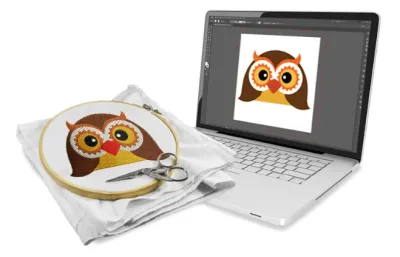
Your logo is the face of your brand. It appears on employee uniforms, client gifts, trade show giveaways, and products that represent your company to the world. When someone sees that logo embroidered on a cap or jacket, they form an impression of your business. A crisp, clean, professional embroidery says you care about quality. A blurry, puckered, misaligned logo says the opposite. This is why professional Embroidery Digitizing Services in the USA are essential. Providers like Absolute Digitizing, Digitizing Buddy, Cool Embroidery Design, and Absolute Digitizer take your flat artwork and transform it into stitch files that reproduce your brand perfectly, every time.
Professional digitizing is more than just converting a file. It is the art and science of translating your unique logo into thousands of individual stitch instructions that embroidery machines can read. When done right, the results are stunning. When done wrong, you waste time, thread, and materials while damaging your brand's reputation.
Let me walk you through what makes professional logo digitizing different and introduce you to these USA-based providers who excel at it.
What Makes Professional Logo Digitizing "Professional"
Professional logo digitizing goes far beyond simply running a JPG through auto-digitizing software. It involves a series of deliberate, expert decisions that ensure your logo looks exactly as designed when stitched on fabric.
Manual digitizing, not auto-digitizing. Auto-digitizing software creates files that look okay on screen but often fail on fabric. Professional digitizers manually map every stitch, ensuring clean edges, proper density, and correct registration.
Fabric expertise. Different fabrics behave differently under the needle. Professional digitizers ask about your materials and adjust underlay, density, and compensation accordingly. A design for denim needs different treatment than the same design for performance knit.
Stitch engineering. Professional digitizers understand stitch physics. They know when to use satin stitches for smooth edges, fill stitches for even coverage, and running stitches for fine details. They plan stitch angles intentionally, alternating directions to create structural stability.
Pull compensation. Thread tension pulls fabric together during stitching. Professional digitizers calculate and apply pull compensation so your logo stitches at the correct size, with outlines perfectly aligned with fills.
Quality assurance. Before files reach you, professional digitizers test them through simulation and often physical sew-outs. They catch errors before they ruin your garments.
The Professional Logo Digitizing Process
Understanding the process helps you appreciate the value professional digitizers bring.
Step 1: Artwork Analysis
The digitizer studies your logo carefully. They identify what makes it unique and must be preserved. They spot potential trouble spots like small text that might fill in or fine lines that might disappear. They ask questions about your intended use—where will the logo appear? On what fabrics? At what sizes?
Step 2: Fabric Consideration
Your digitizer asks about your specific materials. This information drives every subsequent decision.
For stretchy knits: More underlay, higher pull compensation, careful density management
For stable wovens: Tighter parameters, less compensation, standard density
For caps: Center-out sequencing, specialized underlay, push compensation for the curve
For fleece or terry: Heavy underlay to prevent stitches sinking into the nap
Step 3: Stitch Type Selection
Each element gets the stitch type that best captures its character.
Satin stitches for borders, text, and narrow columns (up to about 12mm wide)
Fill stitches (tatami) for large solid areas
Running stitches for fine lines, details, and underlay
Step 4: Stitch Angle Planning
Stitch direction affects how light reflects off your logo. Professionals plan angles intentionally:
For text: Stitches run perpendicular to letter strokes for clean edges
For fills: Angles vary to create visual interest and structural stability
For borders: Perpendicular to the edge for clean definition
Step 5: Underlay Addition
Underlay is the hidden foundation of professional embroidery. It goes down first, stabilizing fabric and creating a smooth base.
Edge run underlay follows outlines, preventing edges from sinking
Center run underlay stabilizes fill areas, especially on stretchy fabrics
Zigzag underlay provides maximum stability for difficult materials
Step 6: Density Calibration
Stitch density controls coverage and feel. Professionals balance these carefully:
For light fabrics: Slightly higher density prevents show-through
For heavy fabrics: Lower density prevents stiffness
For most applications: 0.4-0.5mm between stitches for fills
Step 7: Pull Compensation
Thread tension pulls fabric together during stitching. Without compensation, your logo stitches smaller than intended.
For stretchy fabrics: Higher compensation (0.3-0.4mm)
For stable fabrics: Lower compensation (0.1-0.2mm)
Step 8: Path Optimization
The order in which your machine stitches affects production time and quality. Professionals optimize:
Color sequence: Group similar colors together, stitch small details first
Stitch path: Minimize trims and jumps, connect areas that can stitch continuously
Step 9: Quality Review
Before any file reaches you, professional digitizers review their work through virtual simulation and often physical testing.
Top USA-Based Providers for Professional Logo Digitizing
Absolute Digitizing – The Reliability Standard
Absolute Digitizing has been providing embroidery digitizing services since 1999, with headquarters in New York . They have built a reputation for premium quality and attention to detail.
What sets them apart:
Over two decades of industry experience
In-house team of digitizers (21–40 employees)
Focus on enhanced details and less thread breakage
Vector conversion services also available
Best for: Corporate clients, businesses with complex logos, and anyone who values experience-backed reliability.
Digitizing Buddy – Decades of Experience
With roots dating back to 1999, Digitizing Buddy has digitized logos for thousands of businesses across every industry . They have seen every type of design imaginable and know what works.
What sets them apart:
Flexible pricing (flat rate or stitch-based)
Mobile app for ordering on the go
Experienced digitizers who offer design advice
Strong focus on customer communication
Best for: Businesses with diverse design needs, those who value experience-based guidance, and clients who need flexible pricing options.
Cool Embroidery Design – Creative Edge
Cool Embroidery Design brings creative flair to technical digitizing. They understand that embroidery is not just about accuracy—it is about making designs look their best in thread form.
What sets them apart:
Creative input on design improvements
Expertise in specialty techniques like 3D puff and applique
Artistic approach to challenging designs
Free quotes before ordering
Best for: Fashion brands, businesses wanting unique embroidery effects, and designs that need creative interpretation.
Absolute Digitizer – Efficiency Focus
Absolute Digitizer focuses on creating files that run fast and efficiently while maintaining perfect stitch quality. For businesses producing at scale, this efficiency saves significant production time.
What sets them apart:
Emphasis on production efficiency
100% hand-digitizing with quality checks
Files optimized for faster running times
Strong customer support
Best for: High-volume production shops, businesses with large bulk orders, and those who value production efficiency.
Why Choose USA-Based Services
Communication. You talk during working hours. Questions get answered immediately. Revisions happen fast.
Quality expectations. US digitizers understand what American brands expect. They know corporate logos must match brand guidelines exactly.
Intellectual property protection. Your logo stays in trusted hands. US companies operate under US intellectual property laws.
Accountability. If something goes wrong, you have recourse. You are not chasing an overseas company that disappears.
The Cost of Professional Logo Digitizing
Professional logo digitizing typically costs $10-30 per design depending on complexity . This is a tiny fraction of your overall project cost and pays for itself many times over:
No ruined garments from poorly digitized files
Faster production with optimized stitch paths
Fewer thread breaks and machine stops
Consistent quality across all pieces
Brand protection with accurate logo reproduction
Conclusion
Professional embroidery digitizing services in the USA transform your logo from flat artwork to dimensional thread art that represents your brand with pride. They understand your unique design, choose appropriate stitch types, add proper underlay, calibrate density, apply pull compensation, and optimize stitch paths.
Providers like Absolute Digitizing, Digitizing Buddy, Cool Embroidery Design, and Absolute Digitizer have the expertise to handle this transformation. They treat your logo as unique, apply professional techniques, and deliver files that stitch perfectly.
Your brand deserves embroidery that makes it shine. Professional logo digitizing makes that happen.