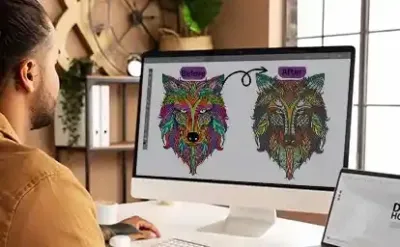
Embroidery has come a long way from punch cards and manual machines. Today, we work with DST, PES, EXP, and VP3 files that carry complex stitch data across thousands of needle penetrations. But technology never stands still. The next decade will bring dramatic changes to how we create, store, and use Embroidery File Formats. From cloud-native designs to AI-assisted digitizing, the future of embroidery files promises to make our work faster, smarter, and more connected.
Let me walk you through the emerging trends that will shape embroidery file formats in the coming years.
The Shift to Cloud-Native Formats
For decades, embroidery files have lived on USBs, hard drives, and local networks. The future is different. Designs will increasingly live in the cloud, accessible from anywhere, on any device.
MySewnet is already leading this shift. This cloud-based ecosystem from Pfaff, Husqvarna Viking, and Singer allows users to access designs from any device, store libraries in the cloud, and transfer files wirelessly to compatible machines . The underlying file formats are evolving to support this new reality.
What cloud-native formats mean:
Designs synced across devices automatically
No more lost USBs or corrupted transfers
Collaboration between designers and production shops in real time
Version control and revision history for design iterations
Access to massive libraries of designs on demand
As internet connectivity becomes standard on embroidery machines, file formats will need to support streaming, partial downloads, and efficient synchronization. We are moving from "save and transfer" to "sync and stitch."
AI-Assisted Digitizing
Artificial intelligence is transforming how we create embroidery files. The 2026 release of Wilcom EmbroideryStudio introduced groundbreaking AI features that hint at the future .
Multi Blend Tool seamlessly blends stitch types and colors across multiple layers, creating smooth gradients that were previously difficult to achieve . This AI-assisted feature analyzes your design and automatically determines the optimal stitch transitions.
Wilcom Answers is an embedded AI assistant that provides instant help and support within the software . Instead of searching manuals or forums, you ask questions and get immediate answers.
Continue Digitizing allows you to pick up digitizing where you left off, with the AI understanding the context of your work .
What AI-assisted digitizing means for file formats:
Files will contain more intelligent data about design intent
Stitch decisions will be documented and editable
Auto-digitizing will become more sophisticated, reducing manual cleanup
Machine learning will optimize stitch paths based on thousands of previous designs
The file formats of the future will store not just stitch data, but the reasoning behind those stitches. This intelligence will make designs more adaptable to different fabrics, sizes, and machines.
Enhanced 3D Preview and Simulation
Current embroidery software offers 2D and basic 3D previews. The future will bring photorealistic simulation that shows exactly how a design will look on fabric, complete with thread sheen, fabric texture, and lighting effects.
What enhanced 3D preview means for file formats:
Files will contain material properties for thread types
Fabric simulation data will be embedded
Lighting and reflection information for accurate preview
Virtual try-on for garments before stitching
This evolution will reduce the need for physical test sew-outs, saving time and materials. Designers will see exactly how their creation will look before a single stitch is sewn.
IoT Integration and Machine Communication
The Internet of Things is coming to embroidery. Machines will communicate with each other, with design software, and with production management systems in real time.
Pulse IQ System already offers centralized control of multiple machines through advanced networking solutions, with real-time production analytics and ERP integration . This is just the beginning.
What IoT integration means for file formats:
Machine status embedded in file transfers
Predictive maintenance data built into design workflows
Real-time production tracking linked to specific designs
Automated machine settings based on file metadata
Future file formats will carry information about optimal machine settings, thread tension recommendations, and even predictive alerts about potential issues. Your machine will "know" how to run the design before you press start.
Expanded Metadata for Production Efficiency
Current embroidery files contain basic metadata: design name, stitch count, color changes. Future formats will carry much richer information.
Production data:
Estimated stitching time per machine type
Thread consumption by color
Optimal hoop size and orientation
Fabric recommendations
Stabilizer requirements
Quality control data:
Tension settings that worked in testing
Needle type recommendations
Speed recommendations for different fabric types
Potential trouble spots flagged for operator attention
Business data:
Client information embedded in files
Order numbers and production runs
Revision history
Cost estimates for production
This expanded metadata will make production planning more efficient, reduce errors, and improve consistency across runs.
Object-Based Formats Becoming Standard
Current machine formats like DST store flattened stitches—just points in space with no intelligence about what those stitches represent. Future formats will increasingly adopt object-based structures.
VP3 and VP4 already store designs as objects, not just stitches . Each element (text, border, fill) exists as a separate object with its own properties. This makes editing, scaling, and adapting designs much easier.
Why object-based formats matter:
Designs remain editable throughout their lifecycle
Scaling preserves stitch intelligence, not just stretches stitches
Different fabric settings can be applied after design creation
Machine features can access object properties for optimization
As more software and machines support object-based formats, we will see DST's dominance challenged. The flexibility of editable formats will outweigh the simplicity of flat stitch files.
Integration with Design Software
Embroidery file formats will become more seamlessly integrated with broader design ecosystems.
Tajima's recent integration with Adobe Substance 3D is a significant step . Designers can now create embroidery effects in Substance 3D Sampler and transfer them directly into Tajima DG17 with one click, automatically applying fabric-optimized settings .
What this means:
Embroidery files will work alongside print and digital files in unified workflows
Designers can preview embroidery on 3D garment models before production
Settings optimized for different fabrics will transfer automatically
Cross-platform compatibility will improve
Sustainability and Efficiency
As sustainability becomes more important, file formats will evolve to support eco-friendly embroidery.
Stitch optimization for reduced thread waste:
Formats that store optimal stitch paths to minimize trims
Thread consumption data for accurate ordering
Waste reduction algorithms embedded in digitizing software
Energy efficiency data:
Machine speed recommendations for energy savings
Production time estimates for scheduling
Batch optimization for reduced machine starts and stops
Security and Intellectual Property Protection
As designs move to the cloud, security becomes critical. Future file formats will include robust protection for intellectual property.
Encryption: Designs stored in the cloud will be encrypted at rest and in transit. Only authorized users will access files.
Watermarking: Digital watermarks will identify the creator and authorized users, discouraging unauthorized sharing.
Access controls: Fine-grained permissions will control who can view, edit, or stitch each design.
Blockchain verification: Some platforms may use blockchain to verify ownership and track usage rights.
Standardization Efforts
The proliferation of formats (DST, PES, EXP, VP3, JEF, and dozens more) creates complexity. Industry efforts toward standardization may gain momentum.
Potential outcomes:
A universal format that works across all machines
Better conversion tools that preserve design intelligence
Simplified workflows for multi-brand shops
Easier collaboration between designers and producers
The Human Element
Despite all this technology, the human element remains essential. Future file formats will support rather than replace skilled digitizers.
AI assistance will handle repetitive tasks, freeing digitizers to focus on creative decisions.
Collaboration tools will make it easier to work with clients and production teams.
Learning resources embedded in software will help new digitizers develop skills.
Conclusion
The future of embroidery file formats is exciting. Cloud-native designs will free us from USBs and local storage. AI-assisted digitizing will make creation faster and smarter. Enhanced 3D preview will let us see exactly what we will stitch. IoT integration will connect machines, software, and production systems. Expanded metadata will improve efficiency. Object-based formats will keep designs editable. Integration with design software will unify workflows. Sustainability features will reduce waste. Security protections will safeguard intellectual property.
But the heart of embroidery remains the same. It is about creating beautiful thread art that delights and endures. Future file formats will serve that purpose better, making it easier for creators to bring their visions to life.
Your embroidery journey will be shaped by these trends. Embrace them, learn them, and use them to create even more beautiful work. The future of embroidery file formats is bright, and it is arriving now.